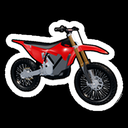
Bike Universe Dirt Bikes: Routes, Braking and Landings
Plan Bike Universe dirt-bike practice around uneven ground, controlled approaches and aligned landings, with community tips and no invented handling stats.
Plan Bike Universe dirt-bike practice around uneven ground, controlled approaches and aligned landings, with community tips and no invented handling stats.
Start with rough ground, then add small landings
For dirt-bike practice in Bike Universe, begin with steering and braking on uneven ground, then add a small ramp with a moderate approach and an aligned exit. The BikeUniverse.wiki dirt-bike guide recommends that progression for Bike Universe before linking direction changes into a shortcut loop. Make the route after the landing part of your plan before taking off.
The official description confirms dirt bikes as one of the game's three named bike categories. The terrain and landing advice in this guide is attributed community guidance. It is useful for organizing a session around uneven surfaces, slopes and low ramps, without treating a community rating as a tested vehicle specification.
This makes the dirt-bike session a terrain exercise. First establish where the bike needs to go across the ground. Next work on reaching that direction after a small landing. Only then join the pieces together. You do not need to start with a large jump to give the session a clear purpose.
Read the ground and the route beyond it
Choose a small section of uneven ground where you can see both your approach and your exit. Before adding a ramp, ride the ground itself and practice the steering and braking decisions it requires. The community's sequence begins here, so you can work on surface changes without adding an airborne attempt at the same time.
| Section to inspect | Question to answer before riding | Initial focus |
|---|---|---|
| Uneven approach | Which direction will you follow across it? | Ground-level steering and braking |
| Slope or low ramp | Where does the route continue afterward? | A moderate approach |
| Landing area | Which way should the bike face on exit? | Alignment with the continuing route |
| Connecting path | Does it lead onward or finish in a dead end? | A usable shortcut connection |
For Bike Universe practice, a connected path matters more than calling a route a shortcut. A low ramp followed by a blocked or unfamiliar exit still needs inspection. Ride the separate ground sections first if necessary, and choose a connection you understand before attempting the full line.
The source also recommends checking recovery space. In practical terms, include the area after the obstacle in your inspection rather than looking only at the takeoff. This is route preparation, not a claim about suspension travel, impact absorption, or a damage system.
Make the landing direction your next task
Once you are comfortable on the approach, add a small landing. The community guidance is to approach at a moderate, controllable pace and align the bike with the direction you intend to take afterward. Concentrate on that relationship between approach and exit, rather than adding an unsupported target for jump height or distance.
An optional way to assess a Bike Universe attempt is to ask whether you continued along the route you selected. If the landing leaves you facing away from it, repeat the same small feature with alignment as your only focus. This describes what to observe; it does not supply an airborne control combination or guarantee a clean result.
| Observation after the attempt | Suggested next practice choice |
|---|---|
| You lose track of the exit before the ramp | Ride the connecting ground section again |
| Your landing direction differs from the planned route | Keep the same small feature and focus on alignment |
| The approach feels too rushed to judge | Use a more controllable approach before repeating |
| You reach the exit consistently | Add a ground-level direction change afterward |
Avoid adding a new ramp, a different approach and an immediate sharp turn together. That gives you several changes to untangle after a poor attempt. A short Bike Universe session can focus entirely on one small landing followed by one clear exit; completing a long circuit is not required to make that practice useful.
The stunt names and feedback guide can help distinguish reported on-screen labels. Seeing a named trick is a separate observation from judging whether the landing carried you into your intended route.
Connect the terrain into a repeatable loop
The final part of the community progression is connecting rough-ground sections, small landings and direction changes into a repeatable shortcut loop. Start by joining two familiar sections. When that connection makes sense, return by a route you already recognize so you can try it again without searching for the starting point.
For your own optional review, describe a problem by location: “the turn after the low ramp” is more useful than “the dirt bike feels wrong.” You can then revisit the approach, landing direction or next turn individually. This is an observation method for your riding, not a game requirement or a hidden progression checkpoint.
If you later consider the same Bike Universe route during a pursuit, inspect its exits and recovery room first. The source recommends avoiding dead ends before adding chase pressure. It does not demonstrate that rough ground stops police, that a slope breaks detection, or that any bike category guarantees an escape.
Choose this category's practice guide when you want terrain exploration and connected small landings. For a session centered on paved straights and corner preparation, the electric-bike guide covers a different task. No numeric grip, suspension, damage or speed advantage is established by the sources used here.
Frequently asked questions
Where should I start learning dirt bikes in Bike Universe?
The community source starts with steering and braking on uneven ground. After that, it adds small landings, direction changes and a repeatable shortcut loop. You can practice each piece before connecting them.
What should I focus on when approaching a low ramp?
Use the source's moderate-approach advice and identify the exit direction in advance. Its landing recommendation is to align the bike with that continuing route, rather than focus on maximum distance.
Are dirt bikes proven to escape AI cops on rough terrain?
The available source provides route advice, not a controlled escape test. Check recovery space and avoid dead ends, but do not treat an off-road path as a verified police counter.